New: funding support for hospital modernisation projects. See how we help

From the first survey to a system that works.

Five steps: survey, design, a pilot in one area, full-scale integration and operation.

Operate: imaging, monitoring, archive, nurse station and operating room exchanging data live through the integration hub, with results on a dashboard.
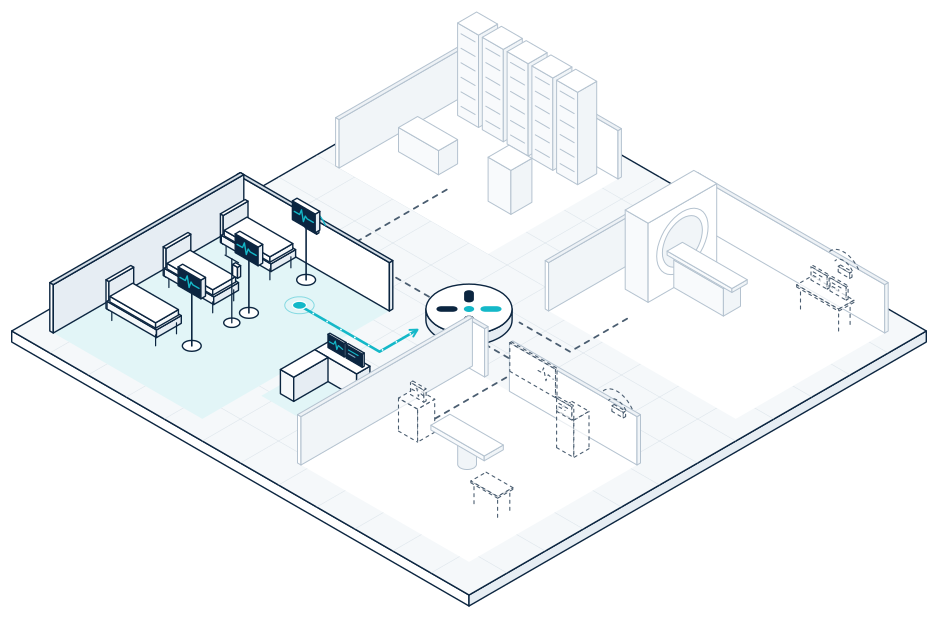
Assess: the existing data centre, CT scanner, ward, nurse station and operating room surveyed and tagged.

Step 1 of 5

Assess. Know what is there.

We survey what is on site, how it is connected and what the hospital needs.

What happens

  • Site survey of rooms, equipment and network
  • Inventory of systems and interfaces
  • Workshops with leadership, IT and clinicians

You receive

  • Current-state report
  • Goals and budget frame, agreed in writing
  • Main risks, and how to handle them

Your team

Site access and a named contact per area.

Apolon Labs is responsible for

Checking the facts, and saying early what will not work.
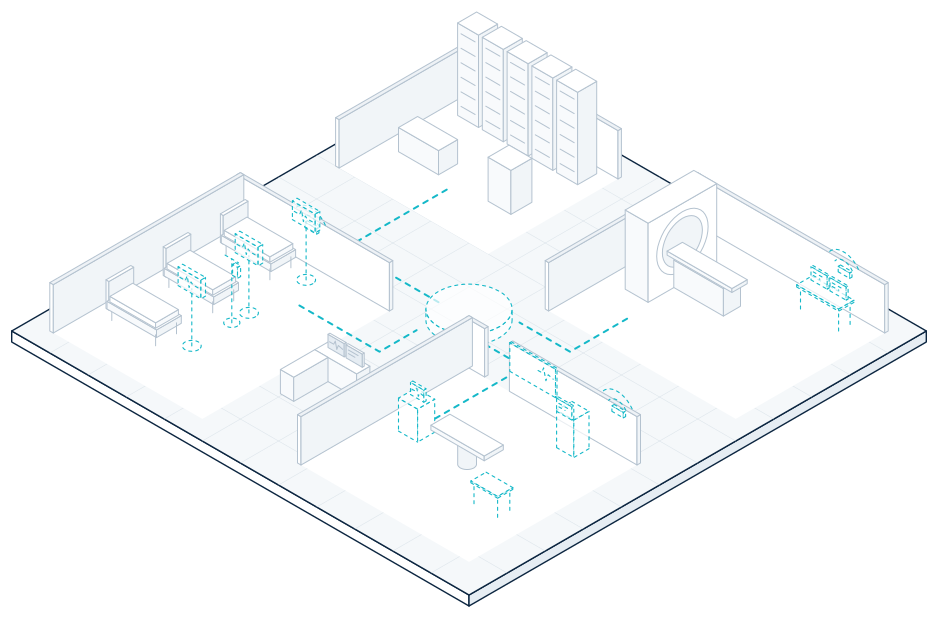
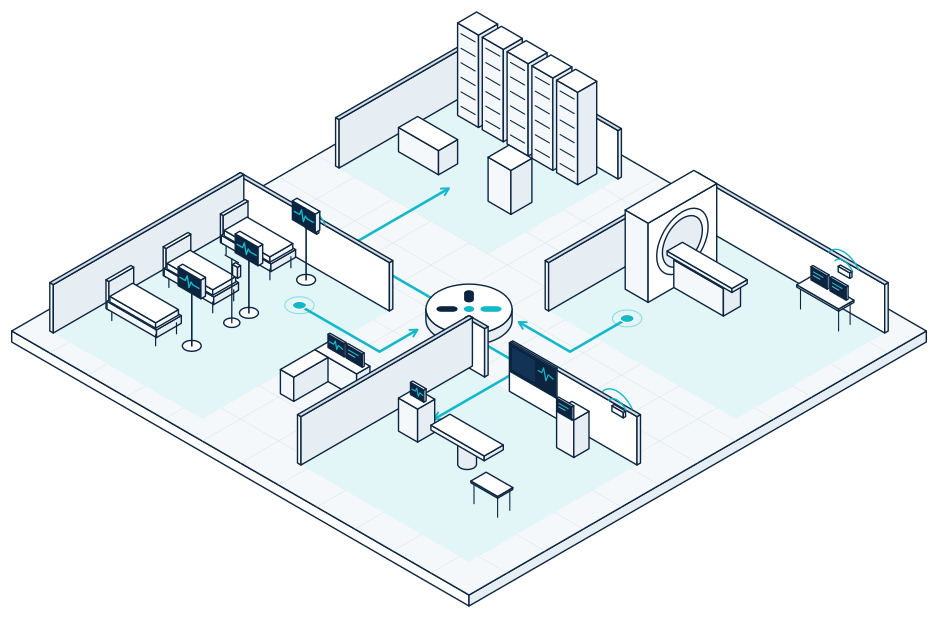
Design: existing equipment greyed out; new monitors, Wi-Fi, the integration hub, operating-room equipment and every connection drawn as a cyan blueprint.

Step 2 of 5

Design. One plan for the whole system.

Infrastructure, devices, software and AI designed together and modelled in the digital twin.

What happens

  • Architecture across all four layers
  • Vendor-open choice of each component
  • Rooms and data flows modelled in the twin

You receive

  • Architecture and integration plan
  • Component portfolio with rationale
  • Timeline, budget and responsibilities

Your team

Scope decisions and clinical input.

Apolon Labs is responsible for

A design that fits your systems, workflows and budget.

Pilot: the ward runs first. Its monitors send vital signs through the hub to the nurse station; everything else is still planned.

Step 3 of 5

Pilot. Prove it in one area first.

One department goes live first, so you see the system working before you scale.

What happens

  • One area installed and connected
  • Clinical staff use it in daily work
  • Results measured against agreed goals

You receive

  • A working pilot
  • Pilot report with measured results
  • Go or adjust decision for full scale

Your team

A pilot department and honest feedback.

Apolon Labs is responsible for

A pilot that runs, and clear numbers on it.

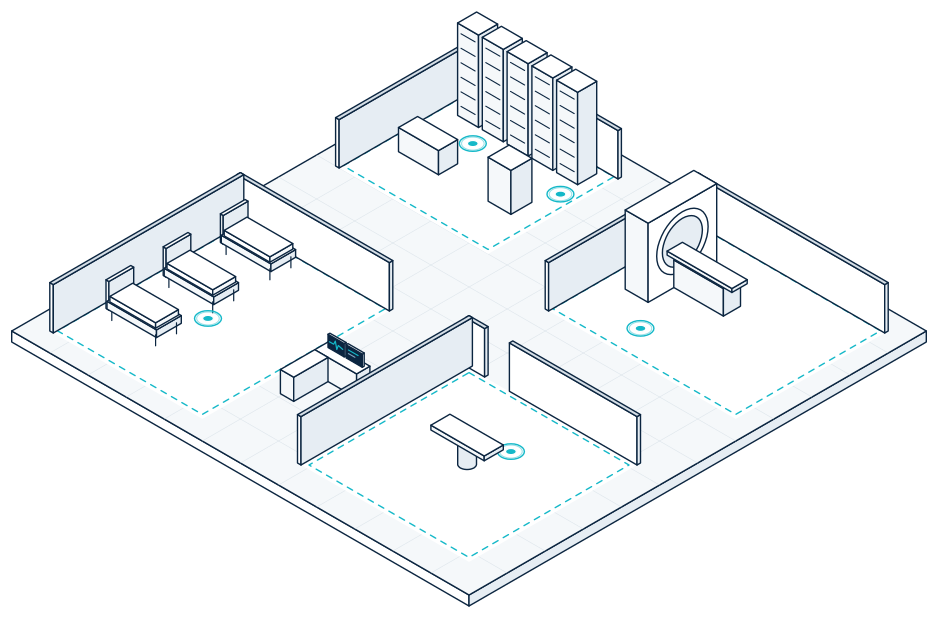
Scale: all equipment installed and every connection built across the hospital floor.

Step 4 of 5

Scale. Full-scale integration.

We roll out to the whole hospital, room by room, so departments keep running.

What happens

  • Installation planned around clinical work
  • Interfaces on HL7 FHIR, DICOM and IHE
  • Acceptance testing with your teams

You receive

  • Signed acceptance records
  • As-built documentation in the twin
  • Training for clinical and IT staff

Your team

Taking part in testing and sign-off.

Apolon Labs is responsible for

Coordinating every vendor, with one contact for you.

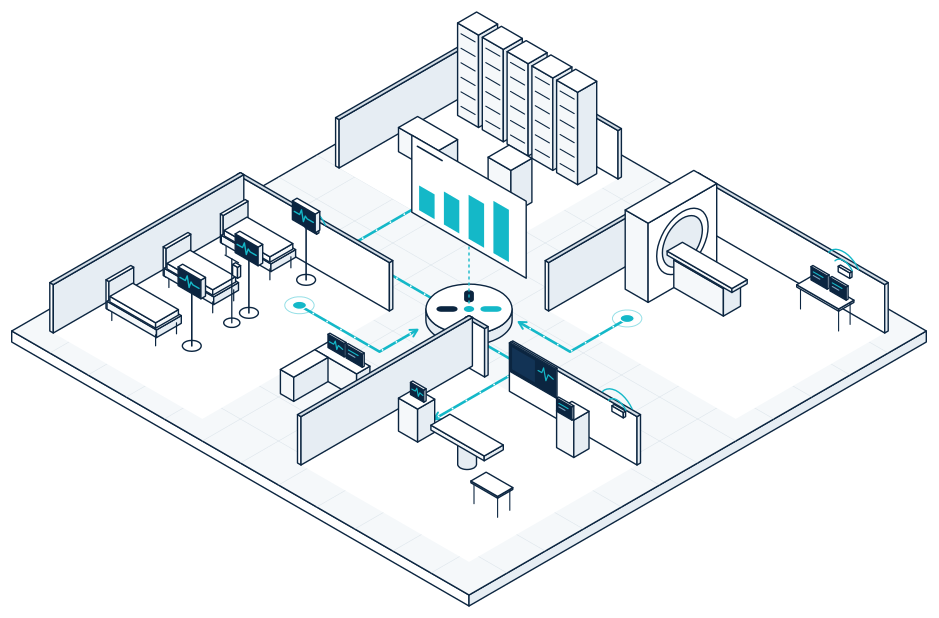
Operate: imaging, monitoring, archive, nurse station and operating room exchanging data live through the integration hub, with results on a dashboard.

Step 5 of 5

Operate. Running, and still ours.

After go-live we stay responsible for the system working as agreed.

What happens

  • Supported go-live per department
  • Monitoring and updates
  • Planned extensions

You receive

  • Handover and asset register
  • Service-level agreement
  • Roadmap for the next phase

Your team

Running the hospital.

Apolon Labs is responsible for

The system working, after go-live too.

Questions

Questions hospitals ask us

Something else? Ask us.

How does a pilot work?

We connect one department or pathway first, measure the results with you and only then scale to the whole hospital.

Do we have to replace what we already run?

No. We connect to what you have on open standards and only recommend replacing what blocks your goals.

Which technology do you use?

We are vendor-open: ICT, medical equipment and clinical software are chosen for your clinical needs and budget.

Can you help with funding?

Yes. We help find EU and national funding and prepare the technical part of the application.

What happens after go-live?

We stay responsible under a service-level agreement, with one point of contact.

Ready for a first step?

Tell us your priority. We suggest a pilot that proves it.